
Five of My Favourites: None of Them Are About the Gym
Every blog on this site is about the work.
The training, the blood work, the gut health, the longevity, the coaching philosophy, the network, the clients, the methodology built across seventeen years of genuinely caring about what happens to the bodies and lives of the people I work with.
This one is not about any of that.
This one is about who I am when the gym does not exist and the coaching is not happening and the protocol is not being designed. It is five things I love that have nothing to do with what I do professionally and everything to do with who I actually am. The man inside the coach. The one whose enthusiasms preceded the career and will outlast it.
You asked me in the do it for you blog to be the best version of yourself and your DNA rather than the performed version. This is that. Five things. No agenda. No action points related to training. Just the honest answer to the question of what I care about when nobody is asking about fitness.
The action points at the end are not what you expect. Read to find out.
Def Leppard: Hysteria
The most commercially successful album in the band's catalogue. Recorded between 1984 and 1987, partly in Dublin, partly in Amsterdam, mostly in conditions of extraordinary difficulty. Drummer Rick Allen lost his arm in a car accident in January 1985, midway through the recording process. The band could have replaced him. Could have found a drummer with two arms and continued on schedule. Instead they stopped. They built him a custom drum kit with foot pedals that replicated the patterns his left hand could no longer play. They waited while he learned to play drums again as a different musician. And then they made the album.
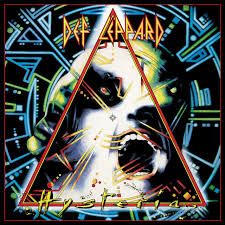
Hysteria sold over twenty million copies worldwide. It produced seven top ten singles from a single album, a record that still stands. It is melodically perfect in the way that a very small number of albums are, where every track holds its position in the sequence with the integrity of a well designed structure. Pour Some Sugar On Me was written in twenty minutes the night before the recording session ended. It became one of the defining rock tracks of the decade.
I have been listening to this album since before I understood what made it exceptional. I understand now. It is the product of people who refused to let catastrophe define the limits of what was possible. Rick Allen's return to the drums is the most concrete example I know of the persistent persistence principle that runs through the Special Forces blog and the Netflix success story blog and half a dozen other pieces on this site. He did not overcome the loss of his arm. He built something new with what remained. And what remained, applied with a different discipline and a longer timeline, produced the album.
The Def Leppard versus Los Del Rio analogy in the Big Three blog was not chosen randomly.
Ayrton Senna: The GOAT of Formula One
There is no serious debate about this. There is debate among people who have not looked closely enough at the evidence, but the evidence is not ambiguous to anyone who has.
Senna drove in 161 Grands Prix between 1984 and 1994. He won 41 of them. He took 65 pole positions, a rate of success that remains statistically extraordinary given the competitive field he was racing in. Three World Championships. In wet conditions, which separate the genuinely gifted from the merely excellent, he was in a category entirely his own.
But the statistics are not the argument. The argument is in the footage. Watch the 1984 Monaco Grand Prix, Senna in a Toleman that had no business being where he was putting it, closing on Alain Prost in a McLaren that was dramatically the superior car, before the race director controversially stopped the race in the rain. Watch the 1993 European Grand Prix at Donington, the opening lap on which he passed four cars including the dominant Williams of Prosta and Hill in conditions that should not have been possible. Watch any qualifying lap from his peak years and observe what it looks like when someone is operating at a level above the visible ceiling of what was thought achievable.
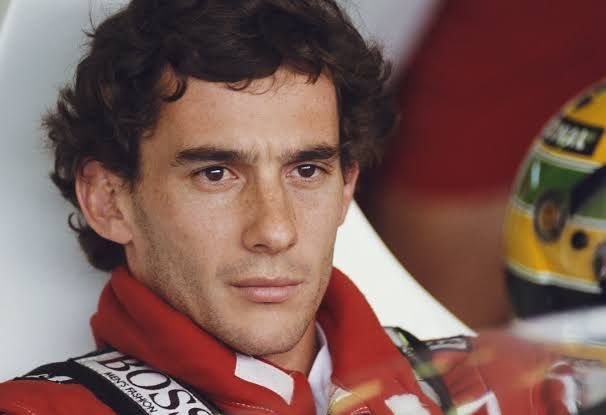
He was also, outside the car, one of the most intellectually serious and philosophically articulate people the sport has produced. The depth of his thinking about what he did, the specific quality of attention he brought to the analysis of his own performance and its limits, is the thing that separates him from drivers who were merely exceptionally fast. He was also relentlessly honest about his own psychology, including a lap at Suzuka in 1988 during qualifying where he described entering a state beyond conscious control, where the car and the track and the self disappeared into something else entirely. He retired from the lap. He was frightened by how deep he had gone.
The sport lost him at Imola in 1994. He was 34. The record of what he achieved in 161 races is the permanent argument.
The de Havilland Mosquito: The Wooden Wonder
The most elegant solution to an engineering problem that the Second World War produced and possibly the most elegant solution to an engineering problem that aviation has produced in total.
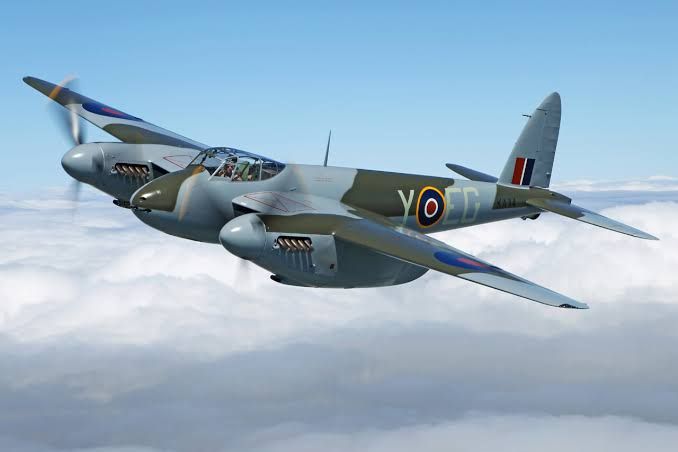
The Mosquito was built primarily of wood. In 1938 when de Havilland began developing it, this was considered not just unusual but actively wrong. Aluminium was the material of modern military aircraft. Wood was what you built furniture from. The Air Ministry rejected the original proposal. De Havilland built it anyway, privately funded, because Geoffrey de Havilland and his team understood something that the committee did not: that a wooden aircraft using skilled civilian craftsmen could be built faster, cheaper, and with materials that did not compete with the aluminium demands of the existing fighter programme.
The Mosquito entered service in 1941. It was faster than any German fighter in operational service at the time. It flew at altitudes that made interception extremely difficult. It carried a bomb load comparable to the four engine heavy bombers of the era at twice the speed and a fraction of the crew requirement. It performed as a bomber, a fighter, a photo reconnaissance aircraft, a pathfinder, a night fighter, and a low level precision attack aircraft. It was the most versatile combat aircraft of the war and it was made of wood.
The Wooden Wonder. The aircraft that was rejected because the conventional wisdom said the materials were wrong, the concept was outdated, and the approach was not how modern military aircraft were built. The aircraft that turned out to be faster, more capable, more versatile, and more effective than most of what had been built with the correct materials by the correct methods.
The lone wolf blog on this site is partly about this aeroplane without ever mentioning it.
The Dark Knight
Christopher Nolan's 2008 film is the argument that the superhero genre, if it is populated by people who take it seriously enough, is capable of producing something that belongs in a different category from the one the genre usually occupies.
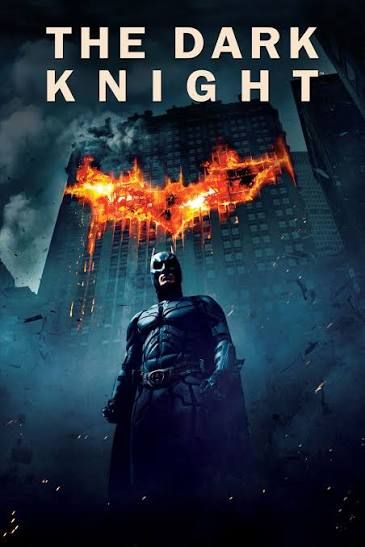
Heath Ledger's Joker is the reason the film exists at a level beyond craft. The performance is one of the most complete and most unsettling character studies in the history of cinema, and the specific quality of unsettlingness it produces is not the result of violence or shock tactics. It is the result of an intelligence that is genuinely coherent and genuinely alien simultaneously. The Joker knows exactly what he is doing and why. His analysis of human nature under pressure is not wrong. That is the disturbing thing. The chaos he introduces is not random. It is a systematic test of the proposition that the civic fabric and the moral commitments that most people claim to hold will dissolve under sufficient pressure into the same darkness he represents.
The film asks questions it does not answer. That is why it stays. The trolley problem applied to Batman. The question of what the principled refusal to cross a line actually costs when crossing it would save more lives than it takes. The question of whether the surveillance state built to defeat the villain is more dangerous than the villain.
Nolan makes the film with absolute technical seriousness. Every frame earns its position. The score, Hans Zimmer and James Newton Howard, is the most effective film score of the decade. Gary Oldman's Jim Gordon is the most underrated performance in a film full of celebrated ones.
It is the best film of the 2000s. That is the position and I am comfortable defending it.
The Colditz Story by P.R. Reid MBE MC
Major Patrick Reid was one of the escape officers at Oflag IV C, the Colditz Castle prisoner of war camp that the German high command used as the containment facility for Allied officers considered the highest escape risk. He escaped in 1942. He wrote the book in 1952. It has not been out of print since.

What Reid captured, and what makes the book something beyond a war memoir or an adventure story, is the specific quality of the human behaviour he observed in conditions of total adversity over years of captivity. The ingenuity. The collective intelligence of a community of exceptional men who, stripped of everything except each other and their determination to resist, produced engineering solutions from materials that should not have produced them. Tunnels. Gliders built in the attic of a medieval castle above a German garrison. Disguises made from whatever was available. Escape routes conceived and executed with the kind of creative problem solving that most people only demonstrate under the specific pressure of having no other option.
The Colditz Story is the original persistent persistence text. The men in that castle did not know when the war would end or whether they would survive it. They had no timeline for their situation and no guarantee that the effort of escape attempts, many of which failed, was going to produce an outcome that justified the cost. They continued anyway. Not because they were certain of success. Because continuing was the only response that was consistent with who they were.
Reid writes with the clarity and economy of a man who has thought carefully about what he experienced and chosen only what is essential to convey it. The book is not long. It contains more of substance per page than most books ten times its length.
If you have not read it, you should.
3 Action Points That Have Nothing To Do With Training
Action Point 1: Name Your Five
Not the five that make you sound interesting. Not the five that align with who you are presenting yourself as in professional contexts. The actual five. The ones that have been part of you long enough to be genuinely yours rather than recently acquired. Write them down. Keep them somewhere. The man who can answer the question of what he loves outside of his work with specific, genuine, enthusiastic particularity is a more whole person than the man who has allowed his professional identity to become the only identity he maintains. The five reveal something that the CV and the LinkedIn profile and the coaching client testimonials do not. They reveal the person. That person is worth knowing clearly.
Action Point 2: Revisit One of Your Favourites This Week as a Deliberate Act of Presence
Not in the background while you do something else. Not as ambient sound or passive viewing. One of your five things, fully attended to, with the same quality of presence the tell the world to piss off blog describes as the most undervalued investment available. The album listened to from the first track to the last without interruption. The film watched without the phone in the same room. The book opened and read for an hour with no other demand on your attention. The race watched, the aircraft studied, the thing that is yours engaged with fully and on its own terms. Notice what that quality of undivided attention produces in you and then consider how rarely you are giving it to anything.
Action Point 3: Share One of Them With Someone Who Does Not Already Know It
Not a recommendation that you send by text and never follow up on. A genuine introduction. The album you play in the car on the way somewhere with someone who has never heard it. The book you hand to someone whose reading you care about with a specific reason for why they should read it. The film you watch with someone who has not seen it and who you want to see experience it for the first time. The things we love are worth passing on. The act of sharing them is one of the most direct forms of genuine human connection available and one of the most consistently underused by men who have built their social interactions primarily around professional contexts. Your five things are a door into who you are that most of the people in your life have never been invited through.
Def Leppard. Senna. The Mosquito. The Dark Knight. Colditz.
Five things that have nothing to do with training and everything to do with who I am. The persistent ones who refused the easier version. The genius operating at a level above what was supposed to be possible. The solution built from the wrong materials that turned out to be right. The film that asked the uncomfortable question. The book about men who continued because continuing was the only thing consistent with what they believed.
You cannot separate the coach from the person. The person is in all of it, including these five things that appear to have nothing to do with the work.
They have everything to do with it.
If you want to work with a coach who is a person first and a methodology second, start here.